Sunday, March 9, 2014

More space for diverse voices

From Robert Azzi's Middle East portfolio: Homeowners decorate the walls of their homes to celebrate the
successful completion of a family member's pilgrimage to Mecca.
I met Robert Azzi years ago because of a coincidence. We had both been Nieman Fellows, meaning we had been given the gift of a year to roam Harvard at will. The coincidence was that we were among the few former Niemans from New Hampshire.

Robert, who lives in Exeter, is a photojournalist who spent many years covering the Middle East. You can see some of his pictures and read of his experience here. After 9/11, when all Muslims suffered suspicion and ostracism, Robert wrote for the Monitor's opinion pages to share his perspectives as a Muslim and an Arab who deplored the attacks.

His writing has a strong moral core. He makes the point that the bellicosity of American foreign policy is often the result of a misreading (or non-reading) of history and a failure to comprehend the consequences of war on innocent people and on our own country's reputation.

I bring this background up for a purpose. One of the fine things the Concord Monitor has done during the last year is to expand its opinion section. Five times a week, Wednesday through Sunday, my longtime colleague Felice Belman edits a creative, interesting, interactive, reader-driven section called The Forum. (Felice also writes most of the daily editorials and edits the regular editorial page on Monday and Tuesday.)

Today's Forum pages include Robert Azzi's column on the U.S. response to the Russian grab for the Crimea. He embraces the restraint President Obama has shown. He cites many historical precedents where Republican and Democratic presidents have exercised restraint with good long-term effect. And he chides Republicans who carp from the sidelines about Obama's weakness rather than stand for solidarity in American foreign policy. You can read this fine piece here.

To give you a sense of the full plate Felice Belman served up today in The Forum, the section also includes:

-- Reporter Kathleen Ronayne's excellent analysis of how Republican senators who supported a Medicaid compromise last week managed to sidestep the howling of their party's Obamacare haters.

-- A wistful farewell to Garry Trudeau's daily Doonesbury strip by Katy Burns, a regular columnist for the Monitor from Bow, N.H.

-- Felice's editorial assessing the ability of Gov. Maggie Hassan to get things done through compromise and bipartisanship, a lost art in Washington.

-- My column on Concord's homeless population.

I should add that the section included 15 letters from readers, including one arguing against all-day kindergarten, one supporting each of the two contenders in Tuesday's Executive Council election and one contending that the state's heroin epidemic could have been avoided.

News is still the heart of a newspaper, but creating a forum for community voices and opinions is a vital function as well.

A 6th New Hampshire gallery (part 2)

Here are more faces of the leaders of the 6th New Hampshire Volunteers. They include Henry H. Pearson and Phin Bixby, each of whom commanded the regiment after Simon G. Griffin became a general. (Part one of this gallery is here.)

Capt. Matthew N. Greenleaf of Exeter was badly wounded during the mine explosion at the Crater in
Petersburg, Va., on July 30, 1864. Discharged disabled, he returned to the 6th in May of 1865.

Thomas H. Dearborn of Seabrook
enlisted at 18.and rose to captain.
He left the 6th in 1864 when
 his three-year term expired.
William H. Keay of Dover, a Canadian
by birth, served with the 6th till war's
end. He was wounded severely at both
Fredericksburg and Petersburg.


Omar W. Cate of Holderness, N.H. was 18 when he joined the regiment. By early 1864 he had
become the quartermaster sergeant. He mustered out July 17, 1865, and later lived in Chicago.

Charles W. Thurston joined the 6th New Hampshire in 1861 as a 22-year-old private from
Stoddard, N.H. He was wounded twice, at Fredericksburg and the Crater, and captured
at Poplar Springs Church, Va., on Sept. 30, 1864. With the New York Tribune correspondent
  Albert D. Richardson and others, Thurston escaped from Salisbury prison. He returned to
his regiment and was promoted to lieutenant. A fuller account of his escape is here. 

Twenty-two-year-old Henry H. Pearson of Exeter
was captain of Co. C. He was wounded at Bull
Run on Aug. 29, 1862. Nearly two years later,
he had just risen to command of the regiment
when he was shot and killed a the North Anna
River during Grant's overland campaign in
in Virginia. You can read more of Pearson's
story here.     
John A. Platts of Fitzwilliam, N.H., was
wounded at Antietam. He later served as
commissary sergeant and lieutenant.  
Lyman Jackman of Woodstock, N.H.,
survived a wound  at Bull Run and
capture at Poplar Springs Church. After
the war he wrote the 6th's history.  

Phineas P. Bixby, a Concord merchant, rose to be colonel of the 6th
New Hampshire in 1865. Along the way he was captured at Second
Bull Run,, released in October 1862 as part of a prisoner exchange
and wounded twice at Petersburg,, once severely.

Friday, March 7, 2014

Hard service for 3 more years 'will make me a cripple'

With bounties rising for new recruits in late 1863, the Union army offered big bonuses for men already in the ranks to re-enlist for three more years, till the end of 1866. Henry B. Wetzell decided to pass.

Wetzell was a corporal in the 51st Pennsylvania Volunteers. He had been in the army since August 1862. Most of his comrades took the money and re-enlisted. On Jan. 14, 1864, a few weeks after Wetzell decided not to, he and several others of like mind from his regiment were abruptly transferred to the 11th New Hampshire.

Wetzell wrote his father, Aaron Wetzell, in Slifer, Pa., to explain the situation and to express confidence that his new comrades from New Hampshire would treat the Pennsylvanians as gentlemen.

The letter was written from Strawberry Plains in East Tennessee, where both the 51st Pennsylvania and the 11th New Hampshire were serving in Ambrose Burnside’s 9th Corps. Here is what Wetzell had to say about his decision:

“You mention the reimbursement question in your last letter. Well, I have taken your advice and did not enlist. I studied the question day and night. It weighed heavily on my mind. I studied the question thoroughly on both sides. Strong inducements were held out to me to re-enlist. Good offers made to me by Officers if I would enlist, etc. etc., but I thought it to be one of the most important cases to decide that I ever had before me.

“I am going by the time my present time expires. I will be nearly old enough to start out in the world for  myself  if ever. A young man in civil life of my age can do far better than serving a military life for 3 years. In 3 years at home I may become fitted for some useful employment in life, something that may be of benefit to me and to others. 3 years more may ruin any young man of my age both morally and physically although I feel pretty well convinced that I am far healthier and have a much stronger constitution than when I left home. Yet 3 years more of as hard service as I have seen since I have been out will make me a cripple.

“These and many other reasons caused me to take a decided stand against re-enlisting and I am persuaded that I took the right course though the excitement ran very high for a few days and caused the greater part of our Reg't to enlist and many who did enlist began to see their folly.

“We were transferred from the 51st Pa. yesterday to the 11th N.H.V. where we now are all who did not enlist in our Reg't. We left yesterday morning. Our Reg’t remained in camp and on picket duty.

“Our whole camp moved here yesterday from Blair’s Cross Roads 12 miles nearer Knoxville along the R. R. so that we can get supplies handier. The cars now run from Nashville here (16 miles from Knoxville) and we are beginning to get more clothing and rations already.

“It was pretty hard to leave behind us yesterday morning many friends whom we had become united together like as if we were all brothers. And also to part from the old ragged, riddled, and battled scarred flag which we had fought under in many a hard fought battle. But we left all these cheerfully as only a soldier can do feeling that we had chosen the right course.

“There are only 5 of our Co. with us who came along. H. C. McCormick, Dave Yoder, Wm. Achenbach, R.A.M. Harner and myself. I think we will be treated like gentlemen both by officers and men for there is not a more common set of people than these New Hampshire men to be found anywhere.”

“We are in a very fine place for a camp in the woods in plenty of good wood to burn and not far from the Holston River. I do not know how long we will remain here, but by all appearances by the way they are fixing up camp we will likely stay for some time. We have not fixed up any yet, but I suppose that we will be ordered to fix up tomorrow.”

Wetzell had thought things through and made a resolute decision. How he judged this decision in retrospect is unknown. He had volunteered for three years in August 1862, and the war ended before his time was up. He was discharged on May 15, 1865. Had he taken the bonus in December 1863, he would have left the army at around the same time but with a fatter pocketbook.

Wednesday, March 5, 2014

My best war story

That's me in civvies and my field jacket during a walk along the Elbe River in 1968. I lived on a pig farm half a mile from
the river, which was the border between East and West Germany. That's a guard tower beyond my right shoulder.
In the years after our book We Went to War came out, Meg Heckman and I gave several lessons on interviewing techniques at story-telling seminars. The book was a collection of oral histories we had done of New Hampshire veterans and others who had lived through World War II.

At the close of our presentation, I sometimes served as the guinea pig for an interview. Class members asked me questions, and Meg gave them tips based on what we had learned during our interviews. Sometimes I used my experience as a Cold Warrior during the late 1960s as the topic for these interviews.

My best Cold War story was about the Soviet invasion of Czechoslovakia in 1968. The questioners in the seminars remembered little or nothing about the invasion, so it was a good topic for the interviewing exercise.

This past week, when Russian troops moved into Ukraine, my best war story was suddenly relevant again. So I wrote a column about it for today's Concord Monitor. Here it is:      

The patch of the Army Security
Agency, my outfit.
On a night in early August 1968, I started my midnight-to-8 a.m. shift on a hillside farm field a short walk from the Iron Curtain. The U.S. Army had converted the field into a surveillance site near the west bank of the Elbe River. On this night there was no shortage of radio signals on which to intercept Soviet military communications across the river in East Germany.

What I heard on my high-frequency radio was not routine traffic – Soviet surface-to-air missile sites tracking planes or army headquarters ordering supplies with encoded messages. What I heard, in voices so loud and clear I knew the speakers were close to our out-station, was Russian tank exercises on what was generally a high-level network.

When the exercises ended, two men I took to be sergeants kept talking. One asked the other why they were training in the middle of the night. The other hesitated, perplexed that his comrade didn’t know. Finally, he said in a slightly disguised way that they were on their way to invade Czechoslovakia.

I listened to the intercept again and again to be sure I had heard what I thought I heard. Then I called in my boss and other linguists and asked them to listen. They heard it, too.

The boss, whose rank was the equivalent of sergeant, called the lieutenant who ran our detachment and suggested we send the intercept to our headquarters as critical intelligence. For reasons I don’t know, this did not happen. Maybe the lieutenant, who was green and did not speak Russian, feared what would happen to him if we were wrong. The intercept was sent as routine and never made a plink in the sea of paper at our headquarters.

I found this pic on the web of the Pevestorf out-station
 where I worked. It was taken before 1968. By the time
I came, the antenna field was larger and concertina enclosed
the entire site. But we still worked in deuce-and-a-halfs
(Army trucks) with radios and other equipment in the back.
Later we heard that high-level intelligence officials had been criticized for failure to produce intercept confirming the invasion of Czechoslovakia. The military rumor mill being what it is, I don’t know if this is so.

For nearly a quarter century now, I’ve thought that this – my best war story – was obsolete. The Iron Curtain is long gone. Mr. Gorbachev tore down that wall. Communism fell. Occasionally with velvet calm, sometimes through strife, the Soviet satellite nations regained autonomy.

But now, along with the many more ominous historical precedents it conjures up, Russia’s invasion of Ukrainian territory in Crimea is a reminder of its four decades as puppet-master in Eastern Europe.

In 1968, when the Soviets swept Alexander Dubcek from power after the Prague Spring, President Lyndon B. Johnson was already a lame duck. In the New Hampshire primary the previous March, Johnson had defeated the peace Democrat Eugene McCarthy by a mere seven points. Nineteen days later, Johnson quit the race.

The country was already involved in an unpopular war in Vietnam. This limited Johnson’s ability to respond to the Soviet invasion of Czechoslovakia, although what he could have done even in a time of peace is questionable.

For us young soldiers along the Iron Curtain the invasion meant a heightened state of alert and the departure of many of our voice intercept operators to out-stations closer to the Czechoslovak border. I worked midnight-to-noon every day well into the fall.

I felt no greater sense of danger than usual during this period. It was an exciting, if exhausting, time. 

Another picture from the web: This one was taken from the top of a truck on the Pevestorf site. Below our hill and
beyond the Elbe River is East Germany. In the early 1990s, after the Iron Curtain disappeared,  Monique and I took a
ferry across the river near this spot and visited a guard tower and a couple of recently liberated dorfs.  
Particularly in the early weeks we had intercept galore, some of it in the languages of non-Russian Warsaw Pact troops. I did not speak these languages, but we had been trained to recognize Polish or Ukrainian by learning to count to 10.

One reason I wasn’t afraid was that I didn’t expect a military response from the United States or NATO. Nor did I think the Soviet Union would broaden the conflict.

We all rooted for Dubcek and his compatriots’ yearning for freedom. We all chuckled over reports of Czechoslovak resisters pointing Prague road signs in the mountains the wrong way to misdirect the Soviet tank drivers. But I didn’t see what our country could possibly do to stop the tanks on cobblestone without risking a war no one wanted.

When the Iron Curtain disappeared 21 years later, my personal history as a Cold Warrior seemed to vanish with it. But now, 25 more years later, it feels relevant again.

The border of the Russian sphere of control has receded, and communism is dead. What has endured is big-man rule in Russia – from the tsars to the commie dictators to Vladimir Putin – men who use brute power to seize what they think they need to maintain control.

President Obama is getting an earful of advice, some of it critical and partisan, as he tries to counter the Russian power grab in Ukraine. But it’s no easier now than it was in 1968 to deal with the ruthless regime in Moscow. Maybe it is even harder in this age of a weaker NATO and a global economy.

If history is any guide, Putin and the Russians will have their way. The best we can hope for is to limit the damage and move on.

Monday, March 3, 2014

A 6th New Hampshire gallery (part one)


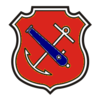
The badge of the Ninth Corps,
in which the 6th New Hampshire
served for most of the war.
Years ago, while researching My Brave Boys, a history of the 5th New Hampshire Volunteers under Edward E. Cross, I haunted antique shops and old paper dealers looking for material.  In one of them I found a collection of cartes de visite, or CDVs, of New Hampshire soldiers. They were from the 6th regiment, not the 5th, but I bought them anyway.

Many of the CDVs were identified and signed. Most were original members and officers of the regiment, which came together in Keene in late 1861. Like John S. Smith, the subject of my last post, most of those who survived stayed in the regiment till the end of the war.

My guess is that these CDVs were once the collection of one of the officers. It has been interesting over the years to learn more about them and, through them, the 6th New Hampshire.

The 6th appears in a few chapters of Our War. The main one tells the story of the drowning of the wives of three officers in August 1862 as they were moving with members of the regiment by steamer just before the second Bull Run battle.

In this post and at least one more I’ll show you faces from this regiment from the CDV collection and elsewhere. (More faces are here and here.)

Simon G, Griffin, a native of Nelson, N.H., was a 36-year-old Concord
lawyer when the war began. He served as a captain in the 2nd New
Hampshire, fighting in the first Bull Run battle. He left to become
lieutenant colonel of the 6th in October 1861 and took over  as colonel
in 1862. By war's end he was a general and division commander.
Robert H. Potter was only 18 when he
joined the 6th as a private. He suffered
a bad wound at Poplar Springs Church,
Va., on Oct. 1, 1864, but was an
officer in the regiment at war's end.

Maj. Samuel D, Quarles of Ossipee was
badly wounded at Spottsylvania
in May 1864 but survived the war.  

Gilmore McL. Houston of Plymouth, N.H., was quartermaster of the 6th. 
Joseph M. Shepard of Gilmanton joined the regiment as a 28-year-old
private in 1861 and re-enlisted in December of 1863. He was soon
promoted to lieutenant. Six months later he was killed at Cold Harbor.  

Charles C. Chesley of Concord
enlisted at 18 as a private and
was wounded at Fredericksburg
and Poplar Springs Church. He
finished the war as an officer. 
Sydney B. Higgins, a 20-year-old
private from Chesterfield, N.H.,
was a lieutenant by war's end.

Saturday, March 1, 2014

'I feel as though I could not turn my back on the Army til the last gun was fired' -- John S. Smith, 6th N.H.

As winter arrived in 1861, the 6th New Hampshire Volunteer Infantry regiment came together at the Cheshire County Fairgrounds in Keene. On Christmas morning, after a brief training camp, the men marched 2½ miles to the train station and headed south. There they took up service under the whiskery Rhode Islander Ambrose Burnside, who would lead them as commander of the 9th Corps for much of the war.

John S. Smith, the 6th New Hampshire
Infantry's adjutant, had been wounded
three times by late 1864 but could not bear
to leave the army until the war was won.  
As measured by the human price it paid, the 6th was a fighting regiment. It suffered 388 deaths, 158 in battle, 197 of disease and the rest in accidents or sickness and starvation in rebel prison camps. It fought at Second Bull Run, Antietam and Fredericksburg, at Vicksburg and Jackson, Miss., from the Wilderness to Cold Harbor, before Petersburg and at Poplar Springs, Va. Its heaviest loss came at Bull Run, where 66 of its officers and men were killed or mortally wounded.

Among the original members of the 6th was John Stearns Smith, who enlisted shortly before his 24th birthday. Like other young men from Peterborough, he went into Company E. When the regiment broke camp in Keene, he had already been promoted to sergeant. He rose to regimental adjutant and served until the end of the war.

Smith’s battle experience reflected his regiment’s. Despite a head wound at Bull Run in August 1862, he returned to fight at Fredericksburg, where the 6th lost 16 killed. He took a minie ball to the hip at Jackson, Miss., in July of 1863. Just over a year later, at the Battle of the Crater, he suffered a slight shell wound to his hand.  

In the following letter, Smith refers to a furlough in September 1864, possibly to recover from his wound at the Crater. Written to from Hancock Station, one of the Union army railroad depots during the siege of Petersburg, the letter paints a vivid picture of the domestic life of a veteran officer in the field.

But in the most moving part of the letter, Smith lays bare the conflicted emotions of a soldier. After three years of war, why would a man who had seen so much death and tempted death himself stay in the army rather than take an honorable discharge with his comrades? Despite the danger Smith wrote, “I feel as though I could not turn my back on the Army til the last gun was fired.”

Here's the letter:

Headquarters 6th N.H. Volunteers
Hancock Station, VA
December 8th, 1864

Dear Cousin Eunice,

I think you must have forgotten your promise to write me on the Sunday following my departure from home in September. Perhaps however, the letter was lost in transmittal; at any rate I will so consider it. I have written to Scripture and directed him to print a copy of the Elm Hill view and send it to you by mail according to my promise. Did you see those copies printed by him before you left? And how did you like them?

Good-natured Phin P. Bixby of Concord 
Sergeant Badger* returned to the Regiment from hospital a few days since. He is looking finely, but will never recover the use of his hand.

We have just returned from a raid toward the Weldon Rail Road, or rather toward Weldon NC. We had an exhausting and disagreeable march through the snow and mud. Found no enemy except a few straggling guerrillas and accomplished nothing worthy of note. Except to destroy fifteen or twenty miles of Rail Road and plunder innumerable corn cribs, cattle farms and poultry yards.

We are now comfortably settled down on the old hill again and have built good quarters. The field and Staff have quarters together on a hill by themselves and mess together. The mess consists of five persons. Lt. Col Bixby, Commanding “a fellow of infinite jest.” Major Quarles, a New Hampshire lawyer and politician, somewhat radical and visionary in his views, who insists that “true courage consists in concealing well your terrors.” Dr. Noyes, a very credulous and unsophisticated fellow; at whose expense many a joke is perpetrated. The Chaplain, a good man, and a practical one, who can preach, work or fight, as occasion requires and myself. We get along fairly together.**

Samuel D, Quarles was the son of a judge in
Ossipee, N.H. He attended New Hampton
School and what is now the University of
Michigan and became a lawyer at 28 the year
the Civil War began. He resigned as Carroll
County school commissioner to join the 6th.
We are extremely fashionable in our habits. Go to bed at twelve and rise at eight. Have breakfast at 9 and again at 4. The house I live in was built by myself. It is the first one I ever owned; and I feel quite independent in it. The style of architecture is decidedly primitive. It is built of logs, about ten feet high with canvas for a roof and the tips of pine boughs for a carpet. I have a fireplace, broad and deep and a mud chimney with an empty barrel on top through which the smoke and sparks whirl and eddy in an indescribable way. The walls are papered with Frank Leslies Illustrated Weeklies which give the room a very picturesque appearance.

My upholstery is from the largest establishment in the Army and consists of a bed, table, office desk and some chairs, all of which are appropriate and comfortable if not elegant. I shall not complain if I am compelled to stay here all winter, nor ask why the Army of the Potomac don’t move.

I hear from home about once a week. The family were all well when they last wrote me. Susie is getting along fairly with her school. In a letter from mother about two weeks since I first received the mournful intelligence of your father’s death. I know how idle and unsatisfactory any words of consolation must be coming from one who cannot feel the terrible misfortune as you do. Yet I cannot help saying that I sympathize with you sincerely in this sad bereavement and asking you to be of good courage. Looking for comfort and consolation where only it can be found. I should be glad to see a paper containing an obituary notice of your Father. Mother said she received one but sent it with Jonathan.

James H. Noyes of Nashua joined the 6th
in 1861 as hospital steward and stayed
long enough to become regimental surgeon.
Many of the officers and men of my Regiment left the service and were mustered out on the 1st of this month. I might have received an honorable discharge at the same time on account of having serviced three years. But I feel as though I could not turn my back on the Army til the last gun was fired.

I went with the officers and men to the train the morning they were mustered out to see them off. They were a jovial bunch I assure you. They have served faithfully for three long years and no one can question their patriotism or fidelity for the cause. For they have a right to go. If they had got off the cars and volunteered their services for three years more, I could not have found a heart to enlist them. It would have been like requiring their death warrant.

When I turned my face toward the Regiment again it was with feelings of regret and sadness that I can hardly express. These men had been with us during three long years. Three weary years of suffering exposure and danger. We had marched shoulder to shoulder in twenty battles, had participated in the hardships and dangers of many campaigns and in the pleasures and conviviality’s of the camp. Our mutual friends and comrades have mingled their dust with the soil of many different states and it was not stranger perhaps that the breakup of these associations, the strongest that can exist among men, should awaken some emotions of sadness in the hearts of the most indifferent and unfeeling. Only a fragment of the original Regiment remains. Who can tell how many of that number will respond to the roll call after three years more service?

A Salute of one hundred guns was fired at sunrise this morning in honor of General Thomas’ victory in Tennessee. Tonight we hear that Sherman is in Savannah. If this glorious news be true we can almost see the beginning of the end.***

I have written more than I intended. Please inform me if you receive the view of Elm Hill. It is getting late and I must bid you good night.

Sincerely yours
Cousin J. S. Smith

My address is 2nd Brigade 2nd Regiment
9th Corps Army of the Potomac

John S. Dore served as the 6th's chaplain from
Nov. 1, 1863, when he was 23 years old, till
war's end. 
*Henry E. Badger of Peterborough was 18 when he joined the same company as Smith in late 1861. He was wounded at Antietam and at Bethesda Church, Va., and, as Smith says here, wounded severely at the Crater. Like Smith, Badger served until war's end.

**A native of Piermont, N.H., Phin P. Bixby was a 32-year-old Concord merchant and former printer when he joined the 6th as adjutant in 1861. He was captured at second Bull Run and wounded twice during the siege of Petersburg. He rose to colonel and commanded the 6th late in the war. Bixby returned to Concord after the war and died there in 1877. Samuel D. Quarles of Ossipee, N.H., enlisted at 28 and served as a company commander in the 6th.  He was wounded severely at Spottsylvania on May 18, 1864, but soon returned as the regiment’s major. James H. Noyes of Nashua was assistant surgeon and, eventually, surgeon of the 6th. The chaplain was John S. Dore of Bangor, Maine.

***These references suggest that Smith may have worked at this letter for several days after starting it on Dec. 8. Maj. Gen. George H. Thomas’s troops won the Battle of Franklin, Tenn., on Nov. 30, 1864. On Dec. 15, a week after Smith’s dateline, Thomas took Nashville. After the March to the Sea, Gen. William T. Sherman’s troops entered Savannah on Dec. 10, two days after Smith's dateline.

[Thanks to my friend Dave Morin for the transcription.]

Thursday, February 27, 2014

Private Andrews's long road home

The opening of George Andrews's letter to his father in New Boston, N.H. Andrews was a private in the 16th N.H.
A good letter captures a moment in time. That is certainly the case with the letter 19-year-old George C. Andrews wrote to his father Issachar from New Orleans on June 22, 1863. I couldn’t help wishing for George and his family that time had stopped the moment his father read the letter.

George was one of several young men from New Boston, N.H., who joined the nine-month 16th New Hampshire Volunteers in 1862. Most, including George Andrews and his brother Calvin went into Company G as privates. They mustered in late October, trained briefly on Concord Heights and headed south in November.

The story of this regiment’s suffering in the swamps of Louisiana and its homecoming is one of the most wrenching chapters of Our War. It is titled “The cup of sorrow,” and Andrews’s letter gives a glimpse of one man's piece of it.

Here it is:

New Orleans June 22, 1863

Dear Father

I will try and write you a few lines. It is with a sad heart that I attempt to write. Poo Abner is dead. He died the fourth day of June up to Brashear City. I did not hear of his death until a day or to agow when some of the boys that was up come down and told me that he was dead. It hardly could seem posible although I was affraid that he could not live the last time I saw him, but it come pretty tough to me when I heard that he was dead. We had always been with the Regt. up to the last of May when he was taken sick. We had always been together untill then and he was kind and obligeing.

Gen. Nathaniel Banks, a former speaker of
the U.S. House and governor of
Massachusetts, was commander of the
Department of the Gulf.
It will be hard for his mother as well as for the rest of us when she comes to hear of his death. His money and things I dont know what was dun with them. There is a bunddle of cloths over to Algiers that he left there. I elieve an Over coat and dress coat and a pair of Pants. I don’t know what is best to do with them whether it is best to try and sell them for what they will fetch or try and cary them home.

I am here to New Orleans yet. I am pretty well though. I am rather weak. I dont know as I told you in my other letter what I had been sick with. In the first place I come pretty near having a high Fever and then the Chils and fever took hold of me so that I used to have them every day but I have got over them now. The last time I saw Calvin he was well and tough. He was down a few days a gow with Prisoners. The Regt. then had not gon to Port Hudson. They were within about four miles of Port Hudson guarding Genl Banks hed quarters and Amunition or what there is of the Regt that is well and that ant but about a hundred and fifty men.

Kelso is dead. He died up to Brashear and Harris Pebody is dead making five out of our town that has died.

I feell & hope that we shall be on our way home soon but I suppose we shant get started until Banks gets through up to Port Hudson.

George C. Andrews

Andrews’s buddy who died at Brashear City was Abner Lull, a New Boston private the same age as Andrews. Records indicate he died on June 5, not June 4, as Andrews reported in his letter. Kelso’s first name was William. He was older – 37. Horace (not Harris) Peabody was 24. Kelso and Peabody were also privates from New Boston.

The letter indicates that Andrews and Lull were together with the regiment through the end of May 1863. That means they were probably among the scores of men of the 16th who fell ill with malaria, dysentery and kindred diseases while garrisoning Fort Burton in a Louisiana bayou. Of the 900 men who had joined the regiment, not one was killed in battle but 300 died of disease.

Many of the sick made it home, arriving in Concord by train on Aug. 14, 1863. Some came later, collected by Good Samaritans from hospitals along the route home. The capital had to build a temporary hospital and even use city hall for  beds for some of the ill men. Even with home care, the dying continued. The regiment’s nine months up, the men mustered out on Aug. 20.

The epitaph on George Andrews's stone in
New Boston Cemetery reads: "Soldier, rest:
thy warfare is over."
George Andrews’s sense that he was on the mend once his fever and chills subsided proved false.When the regiment left New Orleans by boat and steamed up the Mississippi River, Andrews was deemed well enough to travel. But when the boat reached  Cairo, Ill., his condition had worsened, and he was left behind. A few days later, he was put on a railroad car headed east.

When Gov. Joseph A. Gilmore of New Hampshire learned that many sick and dying men from the 16th New Hampshire had been left behind on the trip from New Orleans to Concord, he sent two men to find these men and bring them home. The men were Gilmore’s son, the Rev. Joseph H. Gilmore of Penacook, N.H., and P. Brainard Cogswell, a journalist who lived in the household of the Concord abolitionist Parker Pillsbury.

Gilmore and Cogswell found 30 New Hampshire men in Worcester, Mass., all of them well enough to come home.. At Albany they visited five men in the care of a Miss Carey, a Quaker “who has abandoned the position which wealth and education assign her to become the head of a noble charity.” They also “stumbled on a car-load of sick soldiers, procured omnibuses, got them all (without distinction of State) up to hospital.” Among them were George C. Andrews of New Boston and five other 16th New Hampshire soldiers.

Gilmore helped Andrews to a comfortable bed and later got him home. George's brother Calvin also made it to New Boston, apparently in good health.

On Sept. 6, 1863, George Andrews died. His family had him buried in the New Boston Cemetery with an epitaph that reads: “Soldier, rest:: thy warfare is over.”

[George C. Andrews's wartime diary is in the Milne collection at the University of New Hampshire.]