Thursday, June 5, 2014

'No man . . . shall sit upon the throne of my mind'

The remarkable Marilla M. Ricker wanted nothing more than to break glass ceilings. “Let come what will come, no man, be he priest, minister or judge, shall sit upon the throne of my mind, and decide for me what is right, true, or good,” she once said.

Marilla Ricker
In 1897 Ricker applied to become ambassador to Colombia. No woman had ever held an ambassadorship. Even if she wasn’t appointed, she wrote in her application, she wanted to establish a precedent by asking for the job. The new president, William McKinley, appointed the journalist Charles Burdett Hart instead.

That glass ceiling remained in place for more than a half century longer. Eugenie Moore Anderson broke it when Harry Truman chose her to head the U.S. mission in Denmark in 1949.

But Ricker was not without her supporters. One of them was Henry W. Blair, a former congressman and U.S. senator from New Hampshire. Blair’s letter to McKinley recommending Ricker went up for sale on eBay the other day. That and Ricker’s New Hampshire roots are the reasons for this post.

There’s no way of knowing, but I hope the letter is a draft. If not, Blair strove mightily for the record for the longest run-on sentence fragments in the history of letter-writing. Certainly he had slept through punctuation lessons in school.

But at least the letter asserts that appointing Ricker would be a memorable moment in McKinley’s presidency.   

Henry W. Blair, a former U.S. senator from New
Hampshire, was a Washington lawyer when he
wrote his letter on Ricker's behalf.
To introduce Ricker, my friend and former longtime colleague Felice Belman, now an editor at the Boston Globe, agreed to write a brief biographical essay. Fifteen years ago, she and I edited The New Hampshire Century, a book of profiles of leading New Hampshire figures of the 20th century. The subjects ran from Steven Tyler to David Souter, from Christa McAuliffe to Grace Metalious. Belman wrote the profile of Ricker.

So we begin with her primer on Ricker, followed by Frank W. Blair’s letter:

Here in 2014, electing women to positions of power has become routine in New Hampshire. The state’s two U.S. senators and two U.S. representatives are women. So is the governor. So is the speaker of the New Hampshire House.

They were elected on the basis of their experience, their political ideas, their campaign savvy. But they owe their positions in part to Marilla Ricker, a pioneering feminist who, more than a century ago, helped convince the state’s leaders and voters that women deserved a role in New Hampshire’s political life.

Ricker was born in New Durham, N.H., in 1840 and graduated from what was then Colby Academy in New London. She was a widow before she was 30. Her husband’s death left her money and independence – and she devoted the next 50 years to advocating for women’s rights. She was the first woman admitted to practice law in the state. She was the first woman to apply for a foreign ambassadorship. She was an outspoken atheist who believed organized religion was responsible for subjugating women.

Perhaps most important, Ricker was the first woman in the state to try to vote. She argued that her willingness to pay her property taxes afforded her the right. She argued that women deserved the same rights as blacks. She argued that without the vote, women would never have equal economic power. She argued that female voters would bring attention to issues men ignored.

Election officials were unmoved.

Ricker gave speeches all over the state. She hounded lawmakers and newspaper editors – but most were slow to come around.

In 1910 Ricker attempted to challenge Robert Bass for the Republican nomination for governor. To her thinking, she met the qualifications: She had lived in the state more than seven years and was more than 30 years old – in fact, she was 70. The secretary of state, however, ruled otherwise: Ricker wasn’t a voter and thus couldn’t be governor.

Nine years later, the state finally caught up to Ricker, ratifying the 19th Amendment to the U.S. Constitution granting women the right to vote.

Ricker never held elected office herself, but she nonetheless took satisfaction in the change. The decision, she said, “placed the state of New Hampshire on the right side of one of the great questions of the day.”

*

And here is Blair’s letter:
                                                                                Washington, D.C.
                                                                                 May 3d 1897
To the President:

In addition to the numerous memorials and other manifestations of strong desire now on file for the recognition of the rights of women to a fair share of the responsibilities and emoluments of public office in a free government by the appointment of Mrs. Marilla M. Ricker to an important diplomatic position on the part of many influential able and influential persons and organizations from various parts of the country. I have the honor herewith to enclose a strong letter from Mrs. Lillie Devereaux Blake, President of the New York City Woman Suffrage League and who was one of the principal representatives of her sex before the Committees of the St. Louis convention and has long been a leader in the great movement which has already given the suffrage to women in several states and undoubtedly will in all in the next quarter of a century and in Great Britain made almost equally significant progress; unsolicited, able and generous, (because justice has hitherto been generosity to women); Editorial by Dr. Ridpath in the ‘Arena’ of the current month. 

Conscious that there are strong influences adverse to the appointment of Mrs. Ricker because, and only because, of her sex. I beg of you, Mr. President, not to neglect this pressing & fortunate opportunity to perform a great, just, and I may well say, conspicuous and immortal act, which, if done now, will be sure to rank hereafter among the most illustrious deeds of any American President.
                                                                                    Very respectfully,
                                                                                    Yr. Obt. Servant
                                                                                    Henry W. Blair

Tuesday, June 3, 2014

The alarming decay of Old North Cemetery

Nathaniel Peabody Rogers edited the Herald of Freedom, Concord's abolitionist newspaper.
My wife and I had guests during Memorial Day weekend and did not make it to a cemetery. We thus took a long walk this past weekend in Concord’s Old North Cemetery, stopping before the flagged graves and others. We have been there many times. Franklin Pierce is buried there, as are Concord’s first families – enough Walkers, Stickneys, Eastmans and Abbots to fill the city auditorium.

It is distressing to visit the cemetery. Many of the stones have fallen or are falling. Some are broken. The few words carved on others can no longer be read.

Like the Old North, many cemeteries in New England stopped taking new dead years ago. Few that I have visited are as bad as Concord’s. As much as we New Englanders revere our history, its remnants are fading and disappearing at the Old North.

And there is so much history.

I never go there without visiting the grave of Nathaniel Peabody Rogers, editor of the Herald of Freedom, Concord’s abolitionist newspaper. The gravestone reads:

HERE LIES ALL THAT COULD DIE
OF
NATHANIEL PEABODY ROGERS
PATRIOT LAWYER JOURNALIST
FRIEND OF THE SLAVE
BORN PLYMOUTH N.H. JUNE 3, 1794
DIED CONCORD N.H. OCT. 16, 1846

The implication of “all that could die” strikes me as profound. I don’t read it as a reference to the human soul in a religious sense. It means, I think, that although Rogers threw off his mortal coil, the important part of him – his ideas and the way he expressed and fought for them – endured. This was certainly true in his case, as slavery was indeed abolished, though at great cost.

Rogers was buried on a Sunday, two days after his death, during an early snow. He had requested that no stone be placed on his grave as long as slavery remained in the land. This wish was granted, and the stone you see today was not laid until after his life’s mission was accomplished.

Rogers lies near President Pierce. Their stones are back-to-back, with Pierce on the higher ground and a fence separating them. This is appropriate: Pierce was Peabody’s polar opposite, a so-called Doughface, a northerner with southern leanings. At Concord’s town meeting in 1844, the two squared off over slavery. As good a speaker as Pierce was, Peabody’s argument carried the day.

The main reason we went to the cemetery was to visit Civil War soldier graves. Most veterans of the World Wars, Korea and Vietnam from Concord are at Blossom Hill or Calvary. Old North’s old soldiers date back to the French and Indian Wars.

I know about some of the Civil War men from my research. It is easy to find them now because they – most of them anyway – have flags on their graves.

We found William Hannagan, an Irishman who enlisted in 1861 from Lebanon, N.H., at the age of 34. He was wounded at Fredericksburg and discharged a few months later. In 1864, for a good bonus no doubt, he joined the Veterans Reserve Corps.

At 44, Edward Gerald of Concord was even older than Hannagan when he joined the nine-month 16th New Hampshire in 1862. He was discharged disabled, probably from sickness contracted in the Louisiana bayous. Gerald joined the Veterans Reserve Corps, too – and deserted.

Private Charles C. Fulton, born in Concord, signed up for the 3rd New Hampshire in 1862 and almost made it home alive. He enlisted at the 19. Three years later, on Feb. 19, 1865, he was shot not in battle but in a camp accident. He died the next day and now lies at the Old North.

Thomas C. Weeks, who was 29, joined the 4th New Hampshire in the summer of 1861, survived most of his three-year hitch and re-enlisted in early 1864. Wounded at Deep Bottom, Va., on Aug. 16 of that year, he died six weeks later. Weeks’s stone lies face up, and the elements are eroding the little information about him on it.

On this tour of Old North we at last found the gravestone of Lt. Charles W. Walker. 
A couple of years ago, when I was finishing the manuscript of Our War, Monique and I walked the cemetery many times looking for the grave of Charles W. Walker. He was a lieutenant from Concord and the first man from the city killed in the war. An early chapter in the book is about his elaborate funeral.

We could not find the stone, and I wrote in the Concord Monitor and in the book’s epilogue that it was gone.

This was an error. Some months ago, a student of the war sent me a photo of the stone. This past weekend, we found it at last. It wasn’t easy. It is a small stone in a curbed plot near the tall tree stump on the southern edge of the cemetery. The stone faces east.

Although a modern camera can take a picture of it on which the words are legible, they are difficult to read with the naked eye. It would be good to replace it before it is smooth and completely blackened.

But the Old North is a large cemetery filled with many such disappearing artifacts. Of course, they are not just artifacts; they are also the final resting places of those who went before us. I often think of Thornton Wilder’s Our Town when I go there. Most who lie there probably expected posterity to look after their graves and gravestones.

It might have been a reasonable expectation, but neglect and the elements are slowly canceling it.

Sunday, June 1, 2014

'I never imagined we should see such reverses'

[Charles A. Hale’s Gettysburg scrapbook was the subject of posts here and here. The National Park Service has now posted photos from the scrapbook that allow for zooming in. See those here.]

If you’ve read earlier posts on this blog, you know Charles A. Hale of the 5th New Hampshire had a burning desire to share the story of what he saw and experienced during the Civil War and the literary gift to fulfill this desire.

Cpl. Charles A. Hale
Hale’s instinct to spread the news was evident from the moment his service began. His regiment had first fought at Fair Oaks on the Virginia Peninsula on June 1, 1862. Afterward the men sat for nearly a month within sight of Richmond while the Union army’s commander, Maj. Gen. George B. McClellan, dithered. Then McClellan decided to move. He called it “a change of base,” but this euphemism fooled neither Cpl. Hale nor anyone else. The move was a retreat.

The battles became known as the Seven Days. The 5th fought the enemy at Savage Station, White Oak Swamp, Malvern Hill and Glendale before reaching the safety of Harrison’s Landing on the James River.

If people at home wanted to know what was really happening at the front, the best place to find out was in soldier letters in their local newspapers. Here is Hale’s account of that fighting was vivid to the point of horrifying. He wrote it in the form of a letter to the Granite State Free Press in Lebanon, his hometown:

I cannot give you minute details of the part we took in the retreat. It would take a quire of paper and a week’s time. I never imagined we should see such reverses. We left our old position at 3 o’clock Sunday morning. Our division formed the rear guard, so we fell back but a short distance, a mile or so.

Thousands of dollars of commissary stores were burned, as they could not be transported. It was a frightful night to see such a destruction of property, especially such articles as potatoes, dried apples, molasses, &c., of which we had received such a small quantity for a long time.

By noon our regiment encountered the advance of the enemy, whom we repulsed, with a loss of about 15 killed and wounded. None killed in Co. C: two wounded, neither of them from our section. Shortly after we fell back to Savage’s Station. As the sun was terribly hot we suffered much. Many were sun-struck. At this place much property was destroyed, cars blown up, ammunition, tents, company stores, &c.

I began to think about this time that we were in for it. Before I had been almost incredulous as to a retreat. The rebels were soon at our heels and commenced shelling us.

The infantry engaged them just before sunset. Our regiment was not called on here. Our brigade remained on line until all the troops had passed, when we left the place about midnight, our regiment being the last. We crossed the bridge over Oak Swamp, just at daylight, and immediately set about destroying the bridge, which was soon accomplished.

The troops occupied a rise of ground just above. It proved to be a very hot day. The wagon trains were some time in moving off; consequently we were in somewhat of a huddle. Not a note was heard from the rebels until 2 o’clock, when all of a sudden they opened with a perfect torrent of shell. Our batteries soon got the range, and then there was music I assure you.

They had us in rather a tight fix this time. The train had not all gone. Some of the mules broke loose and were dashing over the field in all directions. It was some time before the troops vacated the place, and gave us a chance to operate.

One of our batteries got badly worsted. The shell burst directly over it; so well had the enemy got the range. One of the caissons was blown up, the horses broke loose, and the confusion was great enough for a few minutes. Hazzard’s battery of our brigade now came into position, with the entire regiment for a support.

The manner of supporting a battery is this, as it is called, is this. The guns are placed in position, and one or more regiments take their position in this way.

                                                                    I    I    I    I    I    I
1st Regiment
.  .  .  .  .  .  .  .  .  .  .  .  .  .  .  .  .
2nd Regiment
.  .  .  .  .  .  .  .  .  .  .  .  .  .  .  .  .

Usually 30 rods or so to the rear, the men all lying flat on the ground, ready to spring up and rush forward in the case the infantry or cavalry charge up to capture the guns. Under a heavy fire it is the most trying position to be in of any I have seen. I would much rather hear the venomous buzz of the bullet than the screech of a shell or solid shot.

The 5th New Hampshire's position at Malvern Hill was in the second rank behind the Union battery on the right in this map.  
At this time we were in the direct range of the fire. The shell burst midway between our position and the battery, and the solid shot struck in our midst or went over. Our battery was the only one at work at this time. We were on a level plain, the sun pouring down, and the dust flying at the least movement. When a shell burst the dust would fly for the space of several rods, where the pieces struck the ground. Only one or two in our line were struck by these.

What we dreaded most were the six pound shot, a little bigger than one's fist, and pieces,of railroad iron. These would strike the ground and bound many times. They would inflict a terrible wound, even at their last bound. We could see them coming after they first struck, as plainly as a ball thrown from a hand. One struck in front of us and bounded into the midst of the line, striking a Corporal in Co. I, who lay not two feet from me. Several struck from 3 to 5 feet directly in front of me, making the dirt and dust fly enough to cover us.

One of the round shot struck in the midst of Co. C, wounding two of our Lebanon boys. Edward Howe had his right leg almost severed from his body, and the left heel carried away.  George Percival lost one arm. Howe was a little hero. He bore it without a complaint. They were carried to a house in the rear. Howe’s wound was mortal. He probably lived but a few hours. Both at any rate fell into the hands of the rebels.

Very heavy firing commenced on our right about 4 o’clock, which proved to be by Kearney’s division. A little after 6 o’clock our brigade was detached to go to his assistance. We started on a double quick and kept it up nearly the whole distance, over a mile and a half. We thought it was rather hard to stand what we had all the afternoon, and then be rushed off into another division and into another fight.

It was nearly dark when we got there. It was all that saved us. Gen. Kearney would have rushed us into the thickest of it, had there been daylight enough left. Two of our regiments had a short skirmish with the enemy; the rest of us were placed on reserve. As it was we had some music about us, but they did little damage.

As soon as it was too dark to do anything more, our regiment was ordered forward to the most advanced position we had gained, which was in the edge of the woods, fronting a large field which the rebels had occupied during the battle. They were busy moving about on the field with lights, picking up their wounded. They would shout out the number of the regiment the man belonged to when one was found. “40th Virginia here is one of your wounded men;” 4th Mississippi battalion,” “Louisiana Tigers,” “Alabama Rangers,” &c. Some of them came within a few rods of where we lay, and we could hear all their conversation.

The ground around us was covered with our dead and wounded. Some of them begged piteously for water. Hardly any of us had a drop, and we had been suffering ourselves for it all day. In more than one instance I heard as high as a dollar offered for a drink of water, by someone overpowered by heat. I had my canteen full in the morning, but it was empty before noon.

As we had been deprived of sleep for most of the time for four nights, it was hard work to keep our eyes open under the present circumstances. I was dozing myself half this time. I was half lying down beside a stump, almost asleep, when I became aware of someone bending over me. I started up and seen a man on his knees beside me, clutching my canteen, which he shook with the frenzy of a dying man. “What do you want?” said I. He made a motion for a drink of water. I looked at him closely and saw that he had received a terrible wound. A bullet had struck him in the cheek, carrying away nearly the whole lower part of his face and most of the bone. I had no water and could not get any. This is only one event of many.

We left this place at 2 o’clock in the morning, as usual being in the rear. Our march was very rapid and we suffered much for water. I snatched up a cup full from a little brook that ran across the road, through which men and horses were travelling. It was half mud, but that was not looked at.

It was 6 o’clock when we again halted on a large plain covered black with troops. We rested an hour or so, and then took position in line of battle. I began to feel rather down in the mouth, but I was determined to stick it out the best I could. I stood it till about 10 o’clock, when I had to give out. I had a terrible feeling in my head and stomach. Two of our boys helped me back to a house where I laid down under the trees.


Capt. James B. Perry
About 4 o’clock the doctor told us we had better start and move on slowly, as we probably could not keep up with the regiment when it moved. I walked till dark and then lay down in a wheat field, having made nearly two miles.

I awoke about 3 o’clock, and found the troops moving past rapidly, so I rolled my blankets and started. It soon began to rain, which made it slow going. Came across one or two others of our regiment, and we struggled on together.

It was in the middle of the afternoon when we halted near here, about a mile from the river. Our men kept coming in in squads till dark.

The next day our present camping ground was assigned to us. It is a good one, with the exception of water, which is bad. Our division has been relieved from active duty, about time, I should think. The regiment cannot turn out two hundred men for duty.

I hear the tell some hard stories of Capt. Perry. Capt. P. stands as high here as ever he did. He did not flinch at Fair Oaks. I know it to be so. Neither did Lieut. Randlett.*

*James B. Perry of Lebanon was the 28-year-old commander of Company C, which included Cpl. Hale and other Lebanon men. He was killed five months later at the battle of Fredericksburg. Nathan Randlett, also of Lebanon, was the company’s first lieutenant. He was wounded at Antietam two and half months after the Seven Days battles. 


[With thanks to Dave Morin for transcribing the letter.]

Saturday, May 31, 2014

Framed and delivered


After reading my series on the 150th anniversary of the Concord Monitor, old friend Chuck Douglas brought in this framed copy of the May 23, 1864, first edition and presented it to the Monitor.

Douglas is a prominent Concord lawyer and political rabble-rouser, a former state Supreme Court justice and former congressman. Here he stands with his gift before the Concord Coach in the lobby of the Monitor building. The photo is by Geoff Forester.

Posts of the Monitor series, in the order I posted them are here, here, here and here.

Thanks, Chuck.

Friday, May 30, 2014

Touched with fire: Holmes on Decoration Day in Keene

For more than a century Memorial Day was observed on May 30 to honor America's war dead. It was originally called Decoration Day. The holiday was changed in 1968 to the fourth Monday in May.

On May 30, 1884, 130 years ago today, Oliver Wendell Holmes Jr. spoke before the John Sedgwick post of the Grand Army of the Republic in Keene. At the time Holmes, the son of a famous medical doctor and writer then still living, was a justice on the Supreme Judicial Council of Massachusetts. Later he would serve 30 years on the U.S. Supreme Court.

Holmes was a veteran of the war, having suffered wounds at Ball’s Bluff, Antietam and Chancellorsville and nearly died of dysentery. The 1946 book Touched with Fire consists of his Civil War letters. He was 33 years old when he spoke at Keene, and he titled the talk “In Our Youth Our Hearts Were Touched with Fire.”

Here is the speech, edited slightly for length:

“Not long ago I heard a young man ask why people still kept up Memorial Day, and it set me thinking of the answer. Not the answer that you and I should give to each other – not the expression of those feelings that, so long as you live, will make this day sacred to memories of love and grief and heroic youth – but an answer which should command the assent of those who do not share our memories, and in which we of the North and our brethren of the South could join in perfect accord.

Oliver Wendell Holmes Jr., 20th Mass. Volunteers 
“So far as this last is concerned, to be sure, there is no trouble. The soldiers who were doing their best to kill one another felt less of personal hostility, I am very certain, than some who were not imperiled by their mutual endeavors. I have heard more than one of those who had been gallant and distinguished officers on the Confederate side say that they had had no such feeling. I know that I and those whom I knew best had not.

“We believed that it was most desirable that the North should win; we believed in the principle that the Union is indissoluble; we, or many of us at least, also believed that the conflict was inevitable, and that slavery had lasted long enough. But we equally believed that those who stood against us held just as sacred convictions that were the opposite of ours, and we respected them as every man with a heart must respect those who give all for their belief.

“The experience of battle soon taught its lesson even to those who came into the field more bitterly disposed. You could not stand up day after day in those indecisive contests where overwhelming victory was impossible because neither side would run as they ought when beaten, without getting at least something of the same brotherhood for the enemy that the north pole of a magnet has for the south – each working in an opposite sense to the other, but each unable to get along without the other.

“As it was then, it is now. The soldiers of the war need no explanations; they can join in commemorating a soldier’s death with feelings not different in kind, whether he fell toward them or by their side.

“But Memorial Day may and ought to have a meaning also for those who do not share our memories.  It celebrates and solemnly reaffirms from year to year a national act of enthusiasm and faith. It embodies in the most impressive form our belief that to act with enthusiasm and faith is the condition of acting greatly.

“To fight out a war, you must believe something and want something with all your might. More than that, you must be willing to commit yourself to a course, perhaps a long and hard one, without being able to foresee exactly where you will come out. All that is required of you is that you should go somewhere as hard as ever you can. The rest belongs to fate.

“When it was felt so deeply as it was on both sides that a man ought to take part in the war unless some conscientious scruple or strong practical reason made it impossible, was that feeling simply the requirement of a local majority that their neighbors should agree with them? I think not: I think the feeling was right – in the South as in the North. I think that, as life is action and passion, it is required of a man that he should share the passion and action of his time at peril of being judged not to have lived.

“If this be so, the use of this day is obvious. Feeling begets feeling, and great feeling begets great feeling. We can hardly share the emotions that make this day to us the most sacred day of the year, and embody them in ceremonial pomp, without in some degree imparting them to those who come after us. I believe from the bottom of my heart that our memorial halls and statues and tablets, the tattered flags of our regiments gathered in the statehouses, are worth more to our young men by way of chastening and inspiration than the monuments of another hundred years of peaceful life could be.

“But even if I am wrong, even if those who come after us are to forget all that we hold dear, and the future is to teach and kindle its children in ways as yet unrevealed, it is enough for us that this day is dear and sacred.

“Accidents may call up the events of the war. You see a battery of guns go by at a trot, and for a moment you are back at White Oak Swamp, or Antietam, or on the Jerusalem Road. You hear a few shots fired in the distance, and for an instant your heart stops as you say to yourself, ‘The skirmishers are at it,’ and listen for the long roll of fire from the main line.

“You meet an old comrade after many years of absence; he recalls the moment that you were nearly surrounded by the enemy, and again there comes up to you that swift and cunning thinking on which once hung life and freedom: Shall I stand the best chance if I try the pistol or the sabre on that man who means to stop me? Will he get his carbine free before I reach him, or can I kill him first? These and the thousand other events we have known are called up by accident, and apart from accident they lie forgotten.

Lt. William L. Putnam
“But as surely as this day comes round we are in the presence of the dead. I see them now, more than I can number, as once I saw them on this earth. They are the same bright figures, or their counterparts, that come also before your eyes; and when I speak of those who were my brothers, the same words describe yours.

“I see a fair-haired lad, a lieutenant, and a captain on whom life had begun somewhat to tell, but still young, sitting by the long mess-table in camp before the regiment left the state, and wondering how many of those who gathered in our tent could hope to see the end of what was then beginning.

“For neither of them was that destiny reserved. I remember, as I awoke from my first long stupor in the hospital after the battle of Ball's Bluff, I heard the doctor say, “He was a beautiful boy” [Lt. William L. Putnam, 20th Mass.], and I knew that one of those two speakers was no more. The other, after passing through all the previous battles, went into Fredericksburg with strange premonition of the end, and there met his fate [Capt. Charles F. Cabot, 20th Mass.].

“I see another youthful lieutenant as I saw him in the Seven Days, when I looked down the line at Glendale. The officers were at the head of their companies. The advance was beginning. We caught each other’s eye and saluted. When next I looked, he was gone [Lt. James. J. Lowell, 20th Mass.].

Lt. James J. Lowell 
“I see the brother of the last – the flame of genius and daring on his face – as he rode before us into the wood of Antietam, out of which came only dead and deadly wounded men. So, a little later, he rode to his death at the head of his cavalry in the Valley.

“In the portraits of some of those who fell in the civil wars of England, Van Dyke has fixed on canvas the type who stand before my memory. Young and gracious faces, somewhat remote and proud, but with a melancholy and sweet kindness. There is upon their faces the shadow of approaching fate, and the glory of generous acceptance of it. I may say of them, as I once heard it said of two Frenchmen, relics of the ancien regime, ‘They were very gentle. They cared nothing for their lives.’ High breeding, romantic chivalry – we who have seen these men can never believe that the power of money or the enervation of pleasure has put an end to them. We know that life may still be lifted into poetry and lit with spiritual charm.

“But the men, not less, perhaps even more, characteristic of New England, were the Puritans of our day. For the Puritan still lives in New England, thank God! and will live there so long as New England lives and keeps her old renown.

“New England is not dead yet. She still is mother of a race of conquerors – stern men, little given to the expression of their feelings, sometimes careless of their graces, but fertile, tenacious, and knowing only duty. Each of you, as I do, thinks of a hundred such that he has known. I see one – grandson of a hard rider of the Revolution and bearer of his historic name – who was with us at Fair Oaks, and afterwards for five days and nights in front of the enemy the only sleep that he would take was what he could snatch sitting erect in his uniform and resting his back against a hut. He fell at Gettysburg [Col. Paul Revere, Jr., 20th Mass.].

Col. Paul Revere, the 20th's commander
“His brother, a surgeon, [Edward H.R. Revere] who rode, as our surgeons so often did, wherever the troops would go, I saw kneeling in ministration to a wounded man just in rear of our line at Antietam, his horse’s bridle round his arm – the next moment his ministrations were ended. His senior associate survived all the wounds and perils of the war, but, not yet through with duty as he understood it, fell in helping the helpless poor who were dying of cholera in a Western city.

“I see another quiet figure, of virtuous life and quiet ways, not much heard of until our left was turned at Petersburg. He was in command of the regiment as he saw our comrades driven in. He threw back our left wing, and the advancing tide of defeat was shattered against his iron wall. He saved an army corps from disaster, and then a round shot ended all for him [Maj. Henry Patten, 20th Mass.].

“There is one who on this day is always present on my mind [Henry Abbott, 20th Mass.]. He entered the army at 19, a second lieutenant. In the Wilderness, already at the head of his regiment, he fell, using the moment that was left him of life to give all of his little fortune to his soldiers.

Henry Livermore Abbott
“I saw him in camp, on the march, in action. I crossed debatable land with him when we were rejoining the Army together. I observed him in every kind of duty, and never in all the time I knew him did I see him fail to choose that alternative of conduct which was most disagreeable to himself. He was indeed a Puritan in all his virtues, without the Puritan austerity; for, when duty was at an end, he who had been the master and leader became the chosen companion in every pleasure that a man might honestly enjoy.

“His few surviving companions will never forget the awful spectacle of his advance alone with his company in the streets of Fredericksburg [Dec. 11, 1862]. In less than sixty seconds he would become the focus of a hidden and annihilating fire from a semicircle of houses. His first platoon had vanished under it in an instant, ten men falling dead by his side. He had quietly turned back to where the other half of his company was waiting, had given the order, ‘Second Platoon, forward!’ and was again moving on, in obedience to superior command, to certain and useless death, when the order he was obeying was countermanded.

“The end was distant only a few seconds; but if you had seen him with his indifferent carriage, and sword swinging from his finger like a cane, you would never have suspected that he was doing more than conducting a company drill on the camp parade ground. He was little more than a boy, but the grizzled corps commanders knew and admired him; and for us, who not only admired, but loved, his death seemed to end a portion of our life also.

William Bartlett
“There is one grave and commanding presence that you all would recognize, for his life has become a part of our common history [William Bartlett, 20th Mass.]. Who does not remember the leader of the assault of the mine at Petersburg? The solitary horseman in front of Port Hudson, whom a foeman worthy of him bade his soldiers spare, from love and admiration of such gallant bearing? Who does not still hear the echo of those eloquent lips after the war, teaching reconciliation and peace? . . .

“I have spoken of some of the men who were near to me among others very near and dear, not because their lives have become historic, but because their lives are the type of what every soldier has known and seen in his own company. In the great democracy of self-devotion private and general stand side by side. Unmarshaled save by their own deeds, the army of the dead sweep before us, ‘wearing their wounds like stars.’ . . . I speak of those whom I have seen. But you all have known such; you, too, remember!

“It is not of the dead alone that we think on this day. There are those still living whose sex forbade them to offer their lives, but who gave instead their happiness. Which of us has not been lifted above himself by the sight of one of those lovely, lonely women, around whom the wand of sorrow has traced its excluding circle – set apart, even when surrounded by loving friends who would fain bring back joy to their lives?

Holmes at 32 in 1884, the year he gave this speech in Keene, N.H.
“I think of one whom the poor of a great city know as their benefactress and friend. I think of one who has lived not less greatly in the midst of her children, to whom she has taught such lessons as may not be heard elsewhere from mortal lips. The story of these and her sisters we must pass in reverent silence. . . .

“Comrades, some of the associations of this day are not only triumphant, but joyful. Not all of those with whom we once stood shoulder to shoulder – not all of those whom we once loved and revered – are gone. On this day we still meet our companions in the freezing winter bivouacs and in those dreadful summer marches where every faculty of the soul seemed to depart one after another, leaving only a dumb animal power to set the teeth and to persist – a blind belief that somewhere and at last there was bread and water. On this day, at least, we still meet and rejoice in the closest tie which is possible between men – a tie which suffering has made indissoluble for better, for worse.

“When we meet thus, when we do honor to the dead in terms that must sometimes embrace the living, we do not deceive ourselves. We attribute no special merit to a man for having served when all were serving. We know that, if the armies of our war did anything worth remembering, the credit belongs not mainly to the individuals who did it, but to average human nature. We also know very well that we cannot live in associations with the past alone, and we admit that, if we would be worthy of the past, we must find new fields for action or thought, and make for ourselves new careers.

Justice Holmes
“But, nevertheless, the generation that carried on the war has been set apart by its experience. Through our great good fortune, in our youth our hearts were touched with fire. It was given to us to learn at the outset that life is a profound and passionate thing. While we are permitted to scorn nothing but indifference, and do not pretend to undervalue the worldly rewards of ambition, we have seen with our own eyes, beyond and above the gold fields, the snowy heights of honor, and it is for us to bear the report to those who come after us. But, above all, we have learned that whether a man accepts from Fortune her spade, and will look downward and dig, or from Aspiration her axe and cord, and will scale the ice, the one and only success which it is his to command is to bring to his work a mighty heart.

“Such hearts – ah me, how many! – were stilled twenty years ago; and to us who remain behind is left this day of memories. Every year – in the full tide of spring, at the height of the symphony of flowers and love and life – here comes a pause, and through the silence we hear the lonely pipe of death. Year after year lovers wandering under the apple trees and through the clover and deep grass are surprised with sudden tears as they see black veiled figures stealing through the morning to a soldier’s grave. Year after year the comrades of the dead follow, with public honor, procession and commemorative flags and funeral march – honor and grief from us who stand almost alone, and have seen the best and noblest of our generation pass away.

“But grief is not the end of all. I seem to hear the funeral march become a paean. I see beyond the forest the moving banners of a hidden column. Our dead brothers still live for us, and bid us think of life, not death – of life to which in their youth they lent the passion and joy of the spring. As I listen, the great chorus of life and joy begins again, and amid the awful orchestra of seen and unseen powers and destinies of good and evil our trumpets sound once more a note of daring, hope and will.”

Monday, May 26, 2014

Memorial Day in Canterbury

Today, my friend Mark Travis is giving the Memorial Day speech in his hometown of Canterbury. Together years ago, Mark and I wrote My Brave Boys, a history of the 5th New Hampshire under Col. Edward E. Cross. We also worked together in journalism for nearly 30 years.  

Mark Travis is on the right in this photo taken in 2001 before the Edward E.
Cross monument in Lancaster, N.H. The woman between Mark and me
is the late Faith Kent, granddaughter of Cross's best friend in Lancaster.
She was the town's historian and helped us research My Brave Boys.    
The Canterbury Memorial Day observance stars veterans from the town, including some who don their uniforms; the minister, the Boy Scouts and other young people, and the Belmont High School Band. Participants gather at the elementary school and proceed down the hill to a gazebo where the ceremony is held. The town cemetery, where several Civil War veterans are buried, is across the street. In past years children have decorated the veterans’ graves with lilacs.

Here is Mark’s talk:

The Memorial Day service in Canterbury is simple, and that’s fitting, given the simple purpose of the day: to remember those who sacrificed their lives for us in war. But today in addressing you I’m going to speak a little more broadly, not only about sacrifices, but also about choices and their consequences.

I want to talk with you about the young members of one Canterbury family and the choices they made at the time of the Civil War. They are the Morrill family, and most of what I know about them I learned from Sam Papps, a Belmont High student who is already a gifted historian.

It’s no exaggeration to say that without the Morrills, Canterbury would be a different place. They were among Canterbury’s first settlers, and they owned land up and down what’s called Morrill Road. The land upon which we are gathered this morning, the land where we are standing, was actually given to the town by a Morrill – the first of many contributions the family made to Canterbury over many generations.

This monument in the Canterbury cemetery was a gift from George Morrill.
So what about the choices the young members of the Morrill family made as the Civil War approached, about 150 years ago?

Let’s start with a girl named Sarah Morrill. Is anyone in the band, or the audience, 16? Well, when Sarah turned 16, in 1843, she left Morrill Road to work in the Manchester mills. She worked six days a week, up to 14 hours a day, shared her bed with another girl, and probably earned a few dollars a week. Not an hour, a week. How does that sound?

Sarah married at about 20, moved to the frontier of Minnesota, and then on to California in a covered wagon. She was a pioneer; it was a hard life. Her first husband died, and so did her second. But she lived a long time, becoming known as an agitator for women’s rights. She made it home only once, years after leaving Canterbury, but was loved by her nieces and nephews here for the wonderful letters she wrote.

So hers was a life of choices and consequences.

Sarah had a brother named George. Is anyone in the band 17? That’s how old George was when the war broke out. Instead of joining the army right away, George went west to Ohio. But in 1864, when he was 20, and it seemed the war would bleed the whole country dry, he enlisted in the army. He served in battles across the South until the fighting ended a year later.  He saved the life of another Canterbury man who had been shot in the groin and couldn’t move his legs, nursing him until he was strong enough for the journey home.

In time George came home, too, and took over the family sawmill at the base of what’s now called Morrill Pond. He was a big success. He built what’s still called New Road, which runs along wetlands for a mile and a half and made it easier for him to get the products he made to Penacook and Concord.

Do you see that Civil War monument at the edge of the cemetery? George paid for that. He also paid for an elaborate family plot in the cemetery, right inside the gap in the wall at the far end. And he paid for a bench at the back edge of the cemetery, creating a spot where he hoped townspeople would sit, look out over what were then fields, and reflect on family members who had spread across the country, like his sister Sarah.

So there was much to admire about George – but there was another side, too. After his first wife died, his second and third divorced him on grounds of extreme cruelty. He was remembered years later by some descendants not for his generosity or his contributions but for his mean spirit.

Choices, and consequences.

Charles W. Morrill
The final Morrill I’ll talk about, and the one whose story is closest to the essence of Memorial Day, was named Charles. He was several years older than George. Anyone in the band hope to go to college? Would anyone be the first in their family to go? Well, Charles was the first in his family.

Like George he left home at 17 for Ohio, but he went there to study. He returned to attend Dartmouth, and he graduated in 1863. Months later, he was drafted. By then the war was unpopular, and almost no one who was drafted actually served. Instead draftees hired substitutes, mainly recent immigrants, to fight in their place.

But not Charles. He did not hire a substitute. He set aside whatever plans he had for his life, and he answered the call. He went south to join the Eighth New Hampshire Volunteers, serving in Louisiana. Twice in battle the horse he was riding was shot and killed beneath him. And soon Charles, like many of the northern boys sent south, got sick. He contracted chronic diarrhea, was discharged, and died in Illinois, on his way home.

Choices, and consequences.

The death of someone so promising was a great blow to the family. When George paid for the marker over there, he made sure to note on it that Charles was a college graduate; in 1960, nearly a hundred years later, when their family home was sold, there was one family possession still hanging on the wall: Charles’s Dartmouth diploma.

In recent years, the young men and women of Canterbury and Belmont and from all around the country have been making choices like the Morrills did during the Civil War. As before, many thousands have served our country in a time of need, and as before, many among them have sacrificed their lives for the rest of us.

I hope before you leave today you’ll wander over to the cemetery and look for some of the markers I’ve described – and in so doing I hope you’ll reflect on the choices, the consequences and the sacrifices, past and present, that this day is all about.

Sunday, May 25, 2014

A printing town, 224 years of newspaper history

This timeline of newspaper history in Concord, N.H., compiled from various sources, ran in the Concord Monitor with my recent three-part series on the 150th anniversary of the first Monitor:

1790 – On Jan. 6, George Hough puts out Concord’s first newspaper from a one-story building on the east side of today’s State House plaza. The paper is a 4-page, 9-by-14-inch sheet called The Concord Herald and New Hampshire Intelligencer. Its motto: “The Press is the oracle of science, the Nurse of Genius, the Shield of Liberty.” A journalist who worked for Hough praised his printing skills but found him lacking in “aptitude with his pen.”

On Dec. 7, the news in the Herald consists of this: “No Boston post arrived; all news, we believe, is frozen up by the cold weather. We have not even a report with which we can serve up a paragraph for our hungry customers.”

1792 – Elijah Russell, a printer in Hough’s office, starts the Mirrour in Concord’s North End. Before the turn of the century, Russell will add two newspapers, including the literary New Star, and a magazine.
Hough enlarges his paper and renames it the Courier of New Hampshire.

1795 – Mirrour expands. Price goes to 5 shillings a year, although barter for produce is common.

1799 – Mirrour and New Star fold.

1801 – Russell starts the first party newspaper in Concord, the Republican Gazette. It espouses the views of Thomas Jefferson and will last for two years.

1806 – William Hoit and Jesse Tuttle start the Concord Gazette. It folds after 37 issues but will resume publication three years later as a Federalist paper.

1808 – Hoit, a master compositor, starts the American Patriot. His plan is to have local literary men prepare the content during a long night’s work just before press-time. In Hoit’s telling, some of these men “became so full of good drink that they fell asleep, and so remained through the night.”

Isaac Hill
1809 – Isaac Hill comes to Concord. He is the town’s “editor of the age,” according to Frank W. Rollins, whose history of newspapers is a main source for this timeline. Another observer remarked that Hill wrote with “that electric force by which a writer upon political affairs imparts to others the convictions and zeal possessed by himself.” Hill is 21 and has just apprenticed at the Amherst Citizen. He buys Hoit’s Patriot for $300, renames it the New Hampshire Patriot and begins publishing on April 19. The paper’s politics are anti-Federalist, later Democratic.

1810 – Hill moves his operation uptown from South Main Street and opens the Franklin Book Store downstairs from his print shop and press.

1812-15 – During the War of 1812, Hill’s paper becomes a mouthpiece for the Madison administration. Circulation soars.

1818 – The Concord Gazette, which Hill mocks as the “crow paper” because of the look of the eagle in its over-inked nameplate, folds.

1819 – George Hough brings out the Concord Observer, the state’s first religious newspaper, with Congregational pastor Asa McFarland contributing articles.

1822 – John W. Shepard of Gilmanton buys Hough’s Observer, renames it the New Hampshire Repository and prints it in a building opposite the State House on Main Street.

1823 – Luther Roby, a printer from Amherst, starts the New Hampshire Statesman, which will become Concord’s chief Whig paper.

1826 – Hill’s Patriot outgrows its quarters. Hill has a three-story building built on the southeast corner of the State House yard. The Franklin Book Store occupies the ground floor.

The New Hampshire Journal debuts. By chance, its editor, Jacob B. Moore, is traveling near Crawford Notch when the Willey House disaster occurs. His account of the death of Samuel Willey, his wife, their five children and two hired men in an Aug. 28 flood brings big sales of the first edition.

1829 – Hill leaves the Patriot. Horatio Hill (Isaac’s brother) and Cyrus Barton take over.

1830 – The Journal merges into Roby’s Statesman, which has taken over the Concord Register and is published from a building on the site of today’s Phenix Hotel.

1831 – A member of President Andrew Jackson’s Kitchen Cabinet, Isaac Hill is elected to the U.S. Senate.

1832 – The New Hampshire Courier (later Courier and Inquirer) appears.

Jackson and Vice President Martin Van Buren visit Concord. Hill presents their party with a Bible and music scores printed in Concord. Six newspapers are now published in town.

1833 – Priestcraft Exposed, an anti-Catholic sheet, issues its first edition. It will last three years.

1834 – The Star of the East, a Universalist paper, begins publication.
Moody Currier, future governor, and Asa Fowler, future state Supreme Court justice, start The Literary 
Gazette. It will last two years.

1835 – On Jan. 24, The Abolitionist publishes its first edition. It will soon become the bi-weekly Herald of Freedom.

1836 – Isaac Hill is elected to the first of three one-year terms as governor.

1838 – The fiery abolitionist Nathaniel Peabody Rogers takes over the Herald of Freedom.

1839 – Former governor Hill and William P. Foster start the Farmers’ Monthly Visitor.

1840 – Hill launches Hill’s New Hampshire Patriot. It will last seven years, publishing weekly except during June legislative sessions, which the former governor reports on daily.

Born in Gilmanton, John R. French worked as a
printer in Concord. After the Civil War he
represented North Carolina in Congress and
served as the Senate's sergeant-at-arms. 
1843 – John R. French starts the White Mountain Torrent, a temperance newspaper, in Low’s Block downtown.

1844 – After a two-year hiatus, Augustus C. Blodgett revives the Courier and Inquirer.

1845 – The Independent Democrat, which breaks with the party to oppose extending slavery to the West, begins publication. A hard-hitting editor, George Gilman Fogg, will be its voice.

The abolitionist Parker Pillsbury takes over as editor of the Herald of Freedom after a bitter dispute between its former editor, Nathaniel P. Rogers, and William Lloyd Garrison.

1846 – The Herald of Freedom folds.

Rogers, the state’s most fervent voice for the abolition of slavery, dies at 52.

Blodgett merges the Courier and Inquirer with the new Concord Gazette.

Democrat William Butterfield, the Nashua Telegraph’s editor, comes to Concord to edit the New Hampshire Patriot. He and Fogg will duel in print throughout the years leading to the Civil War.

1847 – Hill’s Patriot and the Patriot merge under the firm Hill & Butterfield.

Using the nickname of Zachary Taylor, Mexican war hero and future president, True Osgood publishes Rough and Ready, a Whig paper, for 13 weeks. The Democrats counter with Tough and Steady. The two are among many campaign papers published in Concord over the years.

The Statesman's nameplate  is on Asa McFarland's gravestone(second line under his name). (Geoff Forester photo) 
1851 – In its 28th year, the New Hampshire Statesman comes under the editorship of Asa McFarland, son and namesake of the former Congregational pastor. As the Whig Party fades away, the Statesman will migrate into Republican ranks.

Isaac Hill dies on March 22 at age 61.

1852 – Cyrus Barton launches the State Capital Reporter.

1854 – The New Hampshire Phoenix, a temperance newspaper, begins publication.

1855 – Dudley S. Palmer and Edward E. Sturtevant, who will become New Hampshire’s first Civil War volunteer, start Voice of the Stockholders. This short-lived paper takes aim at powerful railroad managers.

1856 – The Democratic Standard, a fierce pro-southern, pro-slavery newspaper, debuts on June 10 in Concord.

1857 – The State Capital Reporter, now owned by Amos Hadley, merges into the Independent Democrat under Hadley and George G. Fogg.

1860 – Fogg accompanies the official party to Springfield, Ill., to inform Abraham Lincoln of his nomination at Chicago. He will become secretary of Lincoln’s national campaign.

1861 – Angry over the Democratic Standard’s pro-southern diatribes and ridicule of Union soldiers, a mob destroys the newspaper on Aug. 8. As its equipment and supplies smolder on Main Street, its proprietors, are hustled through the mob into protective custody.

Lincoln appoints Fogg minister to Switzerland.

1862 – The Legislative Reporter, published jointly by the Statesman, Independent Democrat and Patriot, begins its four-June run during legislative sessions.

1864 – Parsons B. Cogswell and George Sturtevant, older brother of Edward, start the Concord Daily Monitor on May 23.

1867 – The Monitor merges with the Independent Democrat under the auspices of the Independent Press Association. The proprietors are Cogswell, Sturtevant and two former editors of the Independent Democrat, Fogg and Hadley.

1868 – Asa McFarland retires as editor of the Statesman.

The Democratic People begins publication.

The New Hampshire Patriot becomes a daily. Along with Josiah Minot and Franklin Pierce, John M. Hill, Isaac’s son, buys a half interest. William Butterfield, the editor, owns the other half.

William E. Chandler
1871 – The Republican Press Association takes over the Daily Monitor. The Republican Statesman also comes under its auspices, publishing as the weekly Independent Statesman. The move is an effort by 
William E. Chandler and the Concord Clique to heal rifts within the Republican Party and silence the ever-critical Fogg, the Monitor’s editor.

1874 – S.G. Noyes starts the weekly Rays of Light in Penacook.

1878 – The Patriot is sold to the owners of the People and becomes the People and New Hampshire Patriot.

1880 – The newsboys of Concord publish the first edition of News Boy, which will become Christmas Newsboy in December 1882 shortly before expiring.

1881 – The Jug, 1¾-by-1¼ inches in size, debuts in December. Its motto: “Give us justice! Our paper is the smallest in the world.” It will rapidly shrink to nothing.

1884 – After a brief run as a morning paper, the Monitor becomes the Concord Evening Monitor.

Ira C. Evans brings out the first Veteran’s Advocate, a paper for the state’s chapters of the Grand Army of the Republic, the leading Union Civil War veterans’ organization.  Evans, a printer in downtown Concord, served as chief musician of the 12th New Hampshire Volunteers.

1885 – The People and New Hampshire Patriot, now owned by the New Hampshire Democratic Press Co., begins daily publication.

1895 – The Stone Trade News, devoted to the stone business, begins biweekly publication.
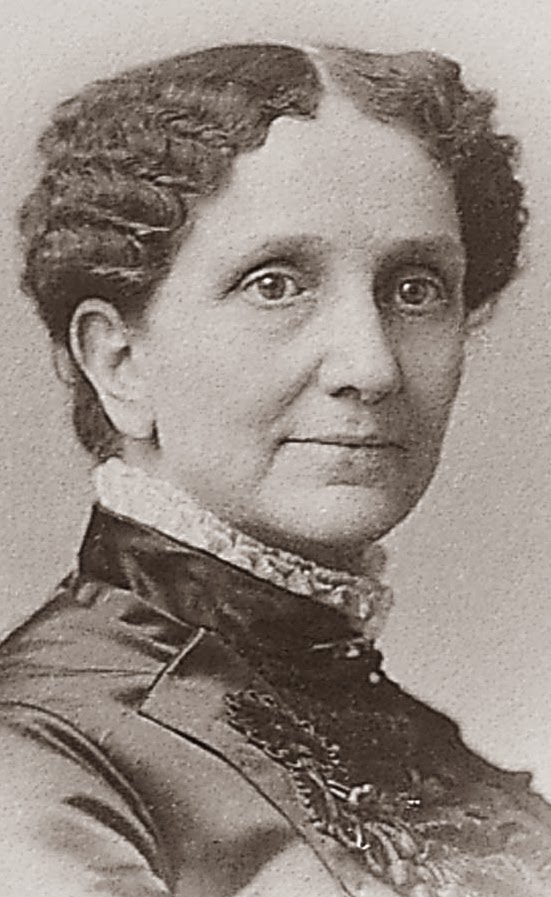
Mary Baker Eddy
1896 – George Higgins Moses, managing editor of the Concord Evening Monitor and a protégé of U.S. Sen. William E. Chandler, interviews and befriends Mary Baker Eddy, founder of Christian Science. Eddy lives at Pleasant View in Concord.

1898 – With the help of a $5,000 loan from the 77-year-old Eddy, Moses buys a share of the Monitor from Chandler. He becomes the paper’s chief editor. William Dwight Chandler, the senator’s son, becomes publisher.

1906 – Moses makes his last loan payment to Mary Baker Eddy.

1909 – President William Howard Taft appoints Moses minister to Greece and Montenegro.

George H. Moses
1918 – Moses is appointed to fill a U.S. Senate vacancy and leaves the Monitor editorship. New Hampshire will elect him to full terms in 1920 and 1926.

Citing rising prices for shoes and clothing, Concord newsboys strike, demanding one cent for each newspaper delivered. William D. Chandler, the Monitor’s publisher, and Edward J. Gallagher, the Patriot’s editor, grant the increase.

1920 – On Nov. 30, a fire started in the property room of White’s Opera House destroys the theater, also causing extensive water damage to the presses and equipment of the New Hampshire Patriot. The owner of the block is the newspaper’s proprietor, Edward J. Gallagher. The loss is estimated at $150,000.


Firefighters douse the ruins of White's Opera House on Concord's Main Street.
1923 – On March 1, 28-year-old James M. Langley, editor of the Sunday Manchester Union Leader, becomes editor and manager of the Concord Daily Monitor and the New Hampshire Patriot. With financing help from his family and from John G. Winant, a master at St. Paul’s School, Langley buys the papers and combines them. Winant receives stock for his investment.

In a signed editorial, Langley states the Monitor’s philosophy: “Its primary and guiding purpose has come to be the honest presentation of daily events that its readers may know what their neighbors have been doing, here, in the state, in the nation and abroad. In its news columns the paper will reflect no political attitude either in the text of its stories or in the display given them. We shall never become a party organ or the organ of an individual or corporation.”

John G. Winant

1924 – When Winant is elected governor, Langley buys back his stock in the papers.
Langley ends publication of the third Concord paper, the Statesman.

1929 – On Columbus Day, the Monitor leaves its longtime home in the Patriot building at Park and Main streets and moves to 3 N. State St.

1930 – Max R. Grossman completes his master’s thesis on New England newspapers at Boston University. He counts six journalists at the Monitor, two copy editors and four reporters. His conclusion: “The Monitor has an inadequate number of reporters, especially for a community in which the state’s capitol is located.”

1942 – For the duration of World War II, Ruel Colby, the Monitor’s sports editor, turns his daily column, “The Sport Galley,” over to letters from Concord GIs in the field and other news of local boys at war.

1952 – Langley acts as public relations officer for Dwight D. Eisenhower’s campaign during the New Hampshire Primary. He helps devise the campaign’s media strategy while writing frequent editorials extolling Eisenhower for president.

James G. Langley and Estes Kefauver of Tennessee,
winner of the 1952 and '56 Democratic presidential
primaries in New Hampshire, check AP wire for results.
1954 – Langley leads the U.S. delegation for Philippine trade negotiations, with the rank of special representative of the president. The negotiations succeed.

1957 – President Eisenhower appoints Langley U.S. ambassador to Pakistan.

1961 – Langley sells the Monitor to William Dwight, a Massachusetts publisher. Langley continues as editor.

1968 – Langley’s self-written obituary in the June 24 Monitor begins: “I died late yesterday afternoon.” He was 73.

Tom W. Gerber becomes the Monitor’s editor.

1975 – William Dwight retires. George W. Wilson, his son-in-law, becomes publisher of the Monitor and president of its parent company.

1983 – Gerber retires. Mike Pride, managing editor since 1978, succeeds him as editor.

1988 – Tom Brown succeeds Wilson as publisher.

1990 – The Monitor leaves downtown for a new building at 1 Monitor Drive.

1984 editorial board with Jesse Jackson. From left: Mike Pride, George Wilson, Jackson, Michael Birkner, Jay
Merwin and Ralph Jimenez. (Ken Williams photo)
1992 – The Monitor switches from afternoon to morning publication.

The Sunday Monitor debuts, with Mark Travis as its editor.

2007 – Publisher Tom Brown becomes president of the Monitor’s parent company, Newspapers of New England, Inc. Geordie Wilson, son of former publisher George W. Wilson, becomes publisher.

Felice Belman
2008 – The Monitor’s Preston Gannaway wins the Pulitzer Prize for feature photography.

Pride retires after 25 years as editor. Monitor veteran Felice Belman succeeds him.

2009 – Tom Brown retires.

Aaron Julien becomes president and CEO of Newspapers of New England, the Monitor’s parent company.

2010 – John Winn Miller joins the Monitor as publisher.

2012 – After Miller’s departure, Mark Travis becomes publisher.

2013 – The Forum, an expanded opinion section, debuts with Felice Belman as its editor.

2014 – Publisher Mark Travis leaves the Monitor.

Belman leaves the Monitor for the Boston Globe.

Steve Leone is named editor of the Monitor.